



Kano Trains Health Workers on Bio-risk Management and Zoonotic Disease Response
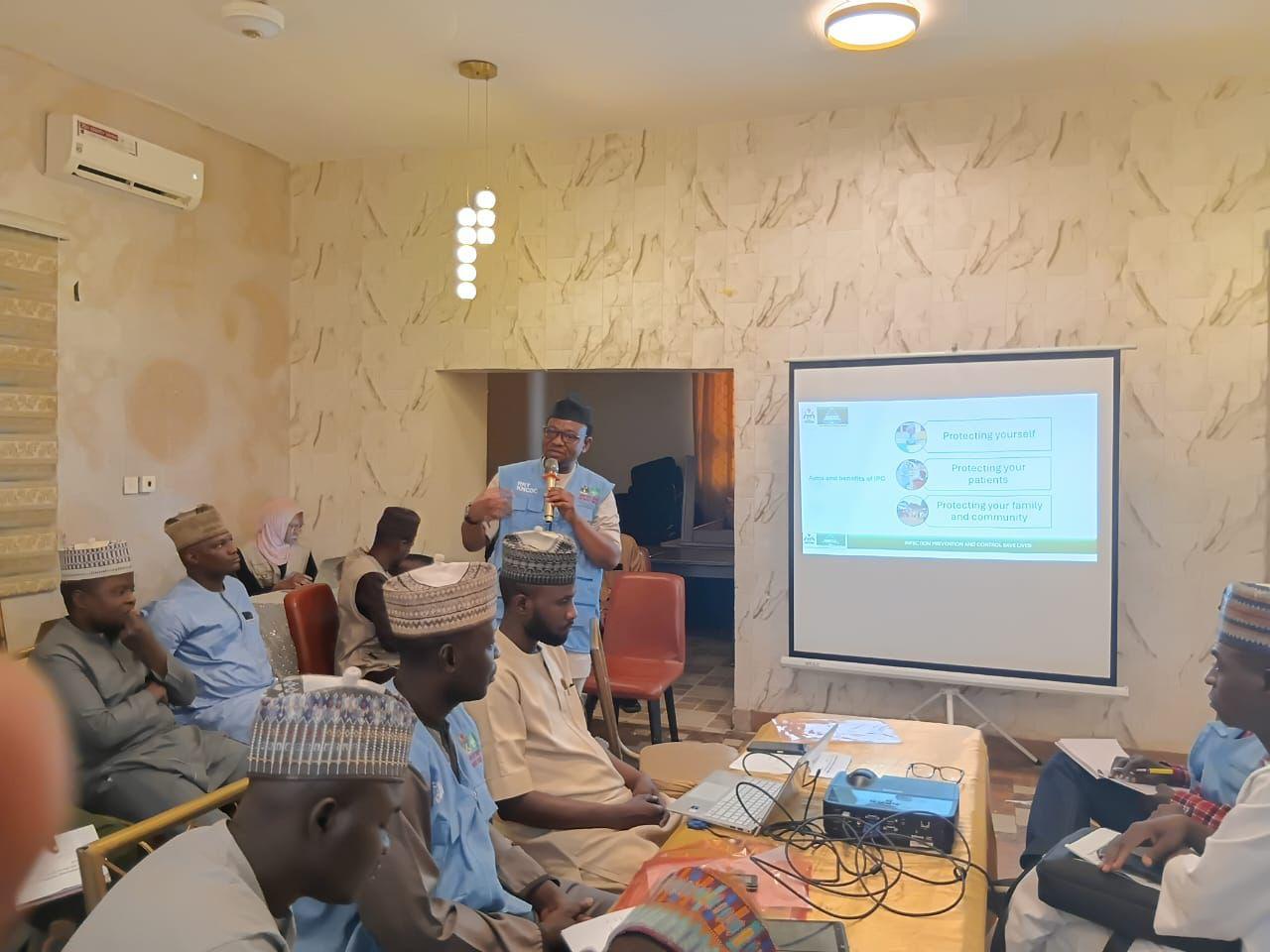
The Kano State Government has trained frontline health workers on bio-risk management and zoonotic disease sample collection as part of efforts to strengthen public health preparedness across the state.
The training was organized by the Kano State Ministry for Livestock Development in collaboration with the Kano State Centre for Disease Control (KNCDC), with support from the Core Group Partners Project.
Speaking at the workshop, the Director General of the Kano State Centre for Disease Control, Prof. Adamu Abbas, in a statement shared to the media ,said the training has significantly improved the technical capacity of surveillance officers in the state.
He stressed the importance of timely and accurate disease reporting, noting that early detection remains key to preventing the spread of zoonotic diseases.
The workshop aimed to build the capacity of health workers in managing bio-risks, improving the safe collection and handling of samples from zoonotic diseases, and strengthening disease surveillance and reporting systems in the state.
The training also emphasized the One Health approach, which encourages collaboration between human, animal, and environmental health sectors to effectively prevent and control disease outbreaks
Participants included Disease Surveillance and Notification Officers (DSNOs) from seven high-burden Local Government Areas—Doguwa, Tofa, Takai, Kura, Dawakin Tofa, Kumbotso, and Bunkure—alongside key stakeholders in surveillance, laboratory services, infection prevention and control (IPC), and data management.
The workshop also provided a platform for participants to share field experiences and challenges, including limited access to remote communities, delays in transporting samples, and inadequate resources.
Key outcomes of the training include improved technical knowledge among participants, stronger inter-sectoral collaboration, and renewed commitment to enhancing disease surveillance at the local government level.
To sustain the gains recorded, stakeholders agreed on steps such as intensifying community sensitization, strengthening Emergency Preparedness and Response (EPR) structures, improving stakeholder engagement, and integrating the One Health approach into surveillance and IPC systems.
Pulse Time Nigeria reports that,the Kano State Government reaffirmed its commitment to continuous capacity building, improved logistics, and enhanced community engagement to ensure effective prevention and response to zoonotic diseases.