



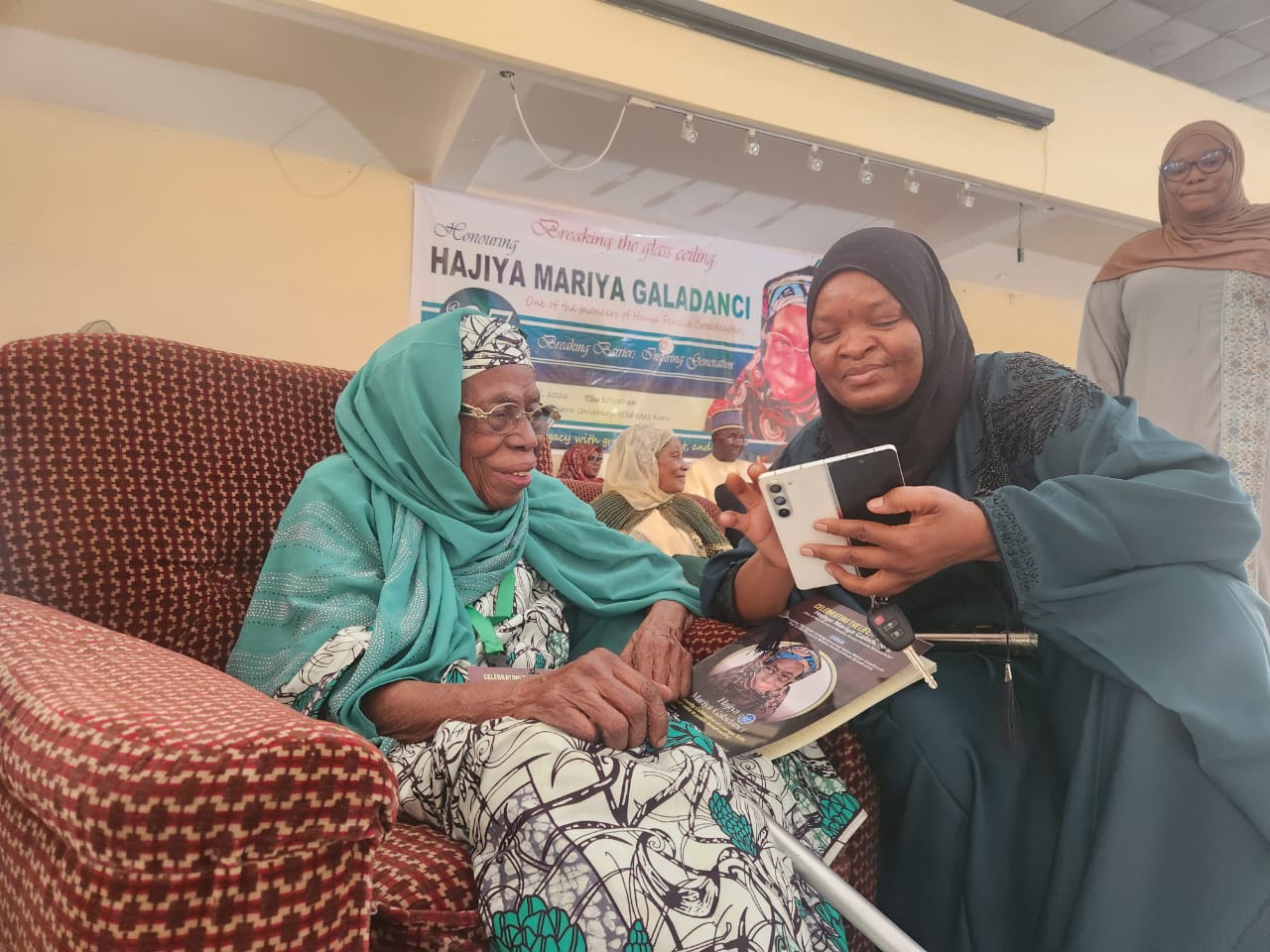
OPINION:“Hajiya Mariya Galadanchi at 97: A Voice That Built Generations in Kano”khalil Imam
By Khalid Imam
In Kano and far beyond, the mention of pioneering female broadcasters cannot be complete without acknowledging the towering legacy of Hajiya Mariya Galadanchi—a woman whose voice has shaped minds, homes, and culture for over six decades.
At 97, her story is not just one of longevity, but of relevance. She remains a symbol of consistency in a media space where many voices fade with time. From her days at Radio Kano, fondly called Gidan Bello Dandago, she built a connection with audiences that went beyond broadcasting—it became a relationship of trust, guidance, and identity.
What makes Hajiya Mariya exceptional is not merely her presence on air, but the substance she carried. At a time when women’s voices were limited in public discourse, she carved a space for herself and others, speaking directly to women about family, health, and the realities of daily life in a way that was both relatable and transformative.
KanSLAM Engages Journalists on MNCH Funding, Seeks Improved Budget Release in Kano
JAMB shifts arrival time for 2026 UTME after backlash
Airstrike Tragedy Sparks Outrage: CISLAC Demands Probe into Borno–Yobe Civilian Killings
Her journey—from a health worker in 1964 to a celebrated media icon—reflects courage and intentional growth. She did not just join the media; she redefined what it meant to be a woman in Hausa broadcasting. Through programs like Filin Zaɓi Son Ka, she did more than entertain—she educated and mentored.
In my view, her greatest legacy lies in the generations she inspired. Today, many female broadcasters in Kano stand on the foundation she quietly built. She broke barriers without noise, proving that impact does not always require confrontation—it can also come through persistence and excellence.
There is also something deeply cultural about her work. She preserved and promoted Hausa traditions at a time when modernization threatened to erode them. From discussions on marriage and parenting to traditional cuisine and social values, her content served as a living archive of Kano’s identity.
Beyond the microphone, Hajiya Mariya represents a form of leadership that is often overlooked—moral and community leadership. She guided women through complex family structures and societal expectations with wisdom rooted in both faith and lived experience.
It is therefore not surprising that calls are being made to immortalize her—whether through naming public spaces after her or establishing fellowships in her honour. These are not just symbolic gestures; they are necessary steps to ensure that her contributions are documented and sustained.
The recent gesture by the Kano State Government, announced by Ibrahim Abdullahi Waiya, to support a fellowship for young female journalists is a step in the right direction.
However, more can be done to institutionalize her legacy within media development frameworks.
As we celebrate her at 97, the real question is not just how long she has lived, but how deeply she has influenced society.
Few can claim to have shaped both media and culture so profoundly.
Hajiya Mariya Galadanchi is not just a veteran broadcaster—she is a living institution.
And perhaps, the greatest honour we can give her is not only to celebrate her, but to continue the work she started: using media as a tool for education, empowerment, and cultural preservation.