


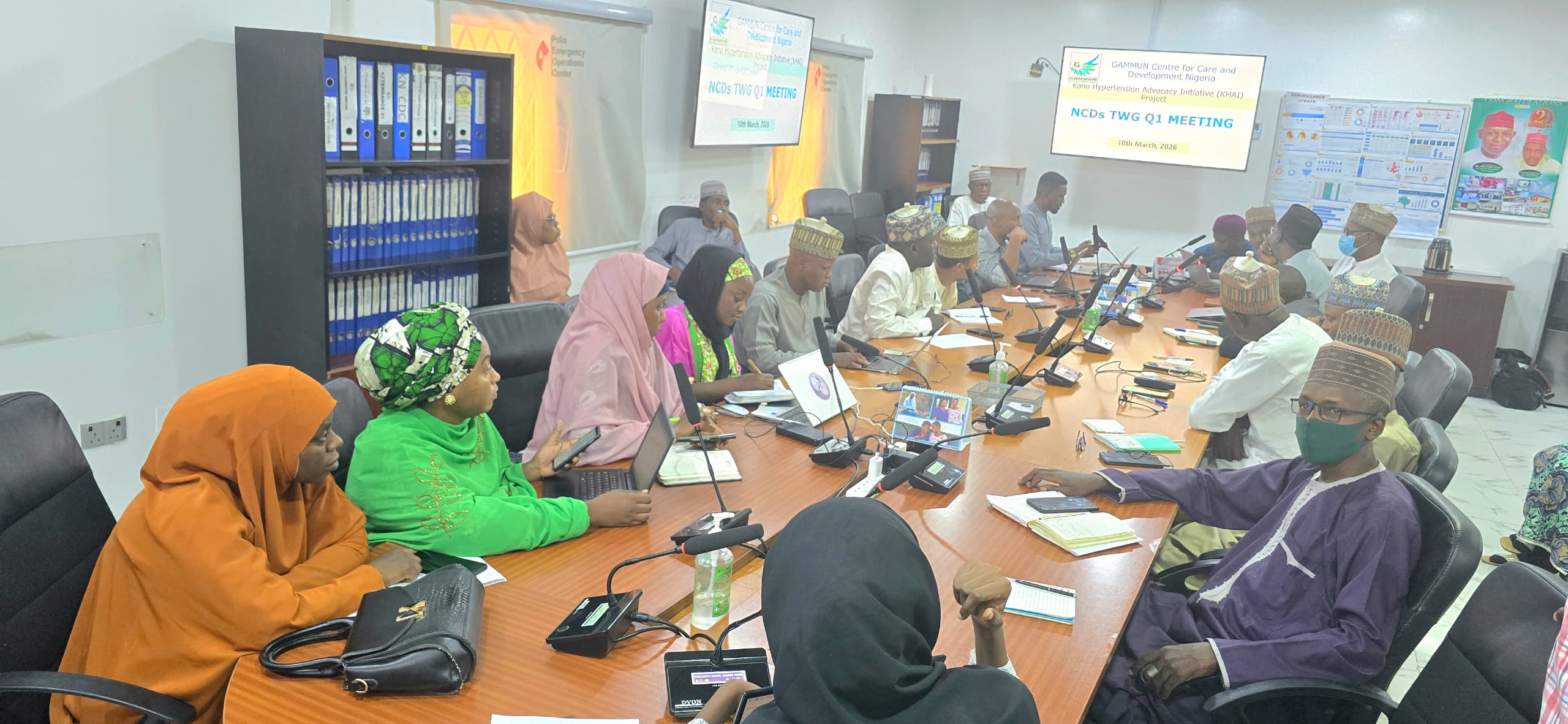
Kano NCD Holds TWG Strategic Meeting, Reviews Progress on Hypertension, Diabetes
The Kano State Non-Communicable Diseases (NCDs) Unit, under the Ministry of Health, organized the First Quarter Technical Working Group (TWG) Strategic Review Meeting to evaluate progress made in addressing the growing burden of chronic diseases in the state.
The meeting brought together key stakeholders and development partners to review progress on NCD interventions, assess key performance indicators, and agree on priority actions aimed at strengthening hypertension and diabetes service delivery across Kano State.
Speaking during the meeting, the NCD Coordinator, Dr. Abubakar Hamza Ahmad , explained that Non-Communicable Diseases are chronic and non-infectious medical conditions that require long-term management and sustained healthcare support.
He noted that the major NCDs affecting communities include hypertension, diabetes, mental health disorders, cancer and sickle cell disease, all of which continue to pose serious public health challenges.
Dr. Hamza explained that NCDs remain a rising health burden in Kano State, adding that interventions implemented in 2025 focused on strengthening integrated services at Primary Health Care (PHC) facilities, early detection of cases, workforce capacity development and the use of digital health tools.
Data presented during the meeting showed that before recent interventions, about 55,511 hypertension patients had no contact with health facilities, while blood pressure control stood at 49 percent and about 27,432 patients had uncontrolled blood pressure.
However, the state recorded improvements in 2025 as hypertension services were expanded from only 52 Primary Health Centres to about 360 PHCs across the state.
In addition, about 616 healthcare workers were trained under the Nigeria Hypertension Control Initiative, which contributed to improving blood pressure control among patients to 62 percent.
The number of hypertension patients without follow-up visits also reduced significantly from 55,511 to about 4,033, while 9,308 patients were recorded to have controlled blood pressure.
The review further revealed that diabetes awareness and care services have been introduced in 50 Primary Health Centres, where 21,436 people were screened for diabetes and 24,982 screened for hypertension across communities.
Out of those screened, 1,934 diabetes cases representing 9 percent were detected, while 3,287 people representing 13.2 percent were diagnosed with hypertension.
The meeting also highlighted progress in mental health services, which are currently being piloted in 45 PHCs using the mhGAP framework, where 617 people were screened for mental health conditions.
Findings presented during the review showed a mental health prevalence of 9.2 percent among those screened, with depression accounting for 5 percent, epilepsy 2.3 percent and anxiety disorders 1.6 percent.
On cancer care, stakeholders noted that the Kano Cancer Centre has managed a total of 444 cancer cases, with cervical cancer accounting for 13.3 percent and breast cancer representing 10.8 percent, while late presentation of cases remains a major concern.
According to the presentation, the digital platform has already screened and diagnosed 236 clients with conditions such as hypertension, diabetes, depression and anxiety, helping improve frontline clinical decision-making.
The Ministry of Health also reported significant capacity-building efforts, with over 720 healthcare workers trained in 2025 on NCD case finding, early detection and management across primary and secondary healthcare facilities.
Other achievements included the distribution of over 100 glucometers and 100,000 test strips across PHCs and communities, as well as the signing of a Memorandum of Understanding between Sanofi and the Kano State Ministry of Health to support electronic medical records, insulin access and training.
Development partners including Gammun Centre for Care Development Nigeria, Clinton Health Access Initiative (CHAI), SIDE ,Project Hope, and Resolve to Save Lives also presented their first-quarter achievements and reaffirmed their commitment to supporting the state in addressing NCD challenges.
UNICEF Launches “Yes! Girl” Podcast to Amplify Voices of Adolescent Girls
Kano Govt Delegation Visits Portugal Ahead of Light Rail Project
IWD 2026: AHIP Advocates Women’s Empowerment, Warns Against Human Trafficking
Pulse Time Nigeria reports that stakeholders at the meeting agreed that scaling integrated services, expanding digital health tools and strengthening prevention and early detection strategies will remain key priorities for 2026.