


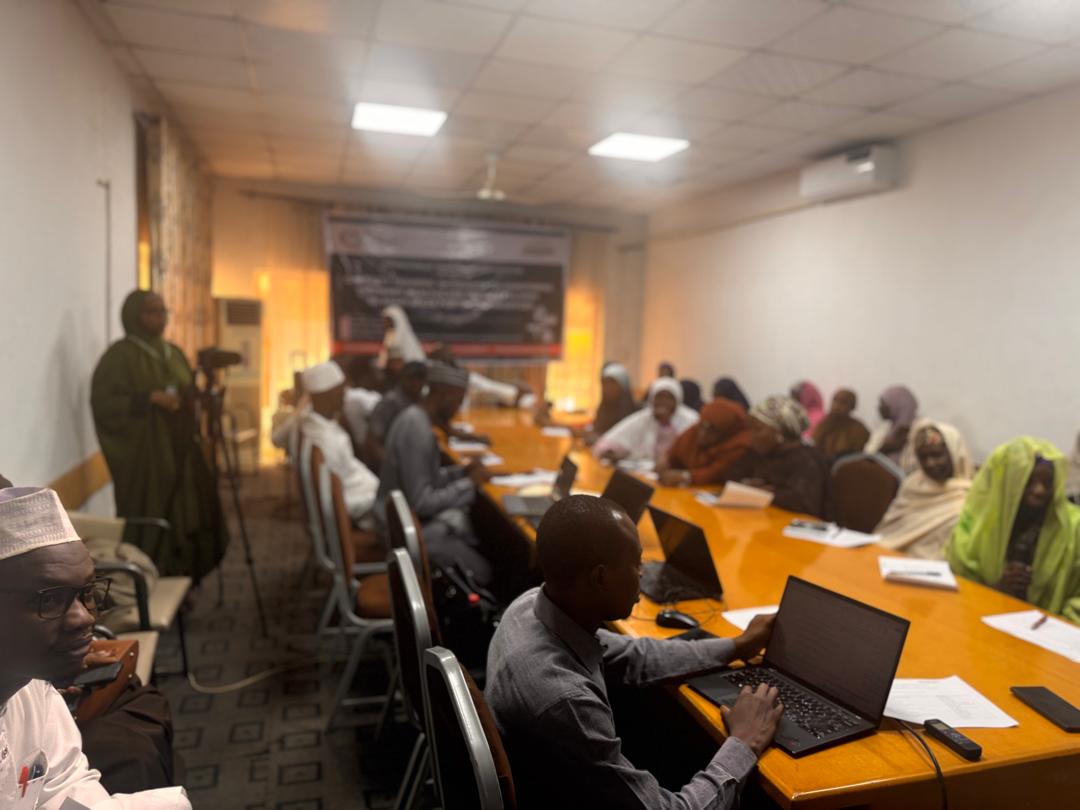
CHRICED Recruits Citizen Monitors to Assess PHC Readiness in Gwale and kumbotso LGA
The Resource Centre for Human Rights and Civic Education (CHRICED) has recruited and trained 40 citizen monitors to assess the readiness of 50 Primary Healthcare Centers in Gwale and Kumbotso Local Government Areas of Kano State.
Speaking at the workshop, the Executive Director of CHRICED, Comrade Ibrahim M. Zikirullahi, who was represented by Mr Omoniyi Adewoye Senior Program Officer Chriced, said maternal mortality occurs largely in PHCs, making facility readiness assessment critical.
“About 80 per cent of maternal and child health deliveries take place in PHCs. That is why we need to understand what is really happening in these facilities. We are conducting a thorough facility readiness assessment to determine how prepared they are to deliver quality services,” he said.
Dr Zikirullahi explained that the citizen monitors will assess key services including postnatal and neonatal care, maternity rooms, medical equipment, tools and other essential facilities.
He added that the data and evidence generated from the assessment will be used to engage relevant government officials and stakeholders, including the Ministry of Health, to push for targeted interventions.
“Once we assess the services, we can deliberately engage government and relevant stakeholders to identify gaps and know exactly where interventions are needed to reduce maternal mortality,” he added.
The CHRICED boss also commended Kano State Governor, Engr Abba Kabir Yusuf, for his efforts to improve the healthcare system in the state.
However, he called on the state government and development partners to urgently intervene to address gaps in the implementation of free maternal healthcare services in the state.
Also speaking, the workshop facilitator, Ms Loveth Anthony Iyortyer, said the training was designed to generate credible data and evidence that will support effective health interventions in Kano.
“We want to understand the real situation on the ground — the challenges, infrastructure gaps and service availability — based on facility readiness assessments guided by World Health Organization (WHO) standards,” she said.
One of the participants, Auwal Babale Dorayi, a citizen monitor from Gwale LGA, said the training will help participants to understand how to navigate health facilities and what areas to assess.
Similarly, Malam Da’u Sule, Chairman of a Community-Based Organization in Kumbotso, said the training equipped monitors with skills to collect accurate data on infrastructure, labour rooms, ambulances and overall service delivery in PHCs.
“The training will help us assess facilities properly and gather evidence that can be used to improve healthcare services in our communities,” he said.
Pulse Time Nigeria reports that the capacity-building was held at Munbaiyya House, Kano, and focused on strengthening community monitoring team of maternal, newborn and child health services, particularly at the primary healthcare level.